
3 posts tagged with "Automation"

Process automation and workflow tools

View All Tags

The Last Mile of AI Is Infrastructure, Not Intelligence

· 19 min read
Marvin Zhang
Software Engineer & Open Source Enthusiast

Every AI keynote in 2026 opens with the same three slides: a bigger model, a faster chip, a smarter agent. The fourth slide — the one about how any of that actually reaches a user in production — is usually missing. That missing slide is where the next decade of value will be created, and it will not be created by another round of model fine-tuning. It will be created by the most unglamorous layer in our stack: infrastructure.

The numbers back the hunch. MIT's 2025 "State of AI in Business" report found that 95% of generative-AI pilots fail to reach production. Gartner found that only 15% of IT application leaders are even piloting fully autonomous agents, despite the agent market projected to grow from $7.8B in 2025 to $52.6B by 2030. The bottleneck is not intelligence. Frontier models cluster around 70–75% on SWE-bench Verified. The bottleneck is everything between a model that can write code and an organization that can ship it — and that everything is infrastructure.

Here is the hot take, stated plainly: as coding gets cheap, infrastructure gets scarce. The DevOps, CI/CD, container, Kubernetes, and cloud-architecture knowledge that the AI narrative treats as "solved plumbing" is about to become the single biggest lever for turning AI capability into shipped product. The reason is simple. Agents can now write code. They cannot, by themselves, run a build, own a deploy, route a rollback, or provision a region. They need a substrate that does those things for them — and that substrate is the accumulated, low-cost, battle-tested output of two decades of DevOps work.
Unattended AI Programming: My Experience Using GitHub Copilot Agent for Content Migration

· 7 min read
Marvin Zhang
Software Engineer & Open Source Enthusiast

Introduction

Recently, I successfully used GitHub Copilot Agent to migrate all my archived markdown articles to this Docusaurus-based blog, and the experience was surprisingly smooth and efficient. What impressed me most wasn't just the AI's ability to handle repetitive tasks, but also how I could guide it to work autonomously while I focused on higher-level decisions. Even more fascinating was that I could review and guide the AI agent's work using my phone during commutes or breaks. This experience fundamentally changed my perspective on AI-assisted development workflows.

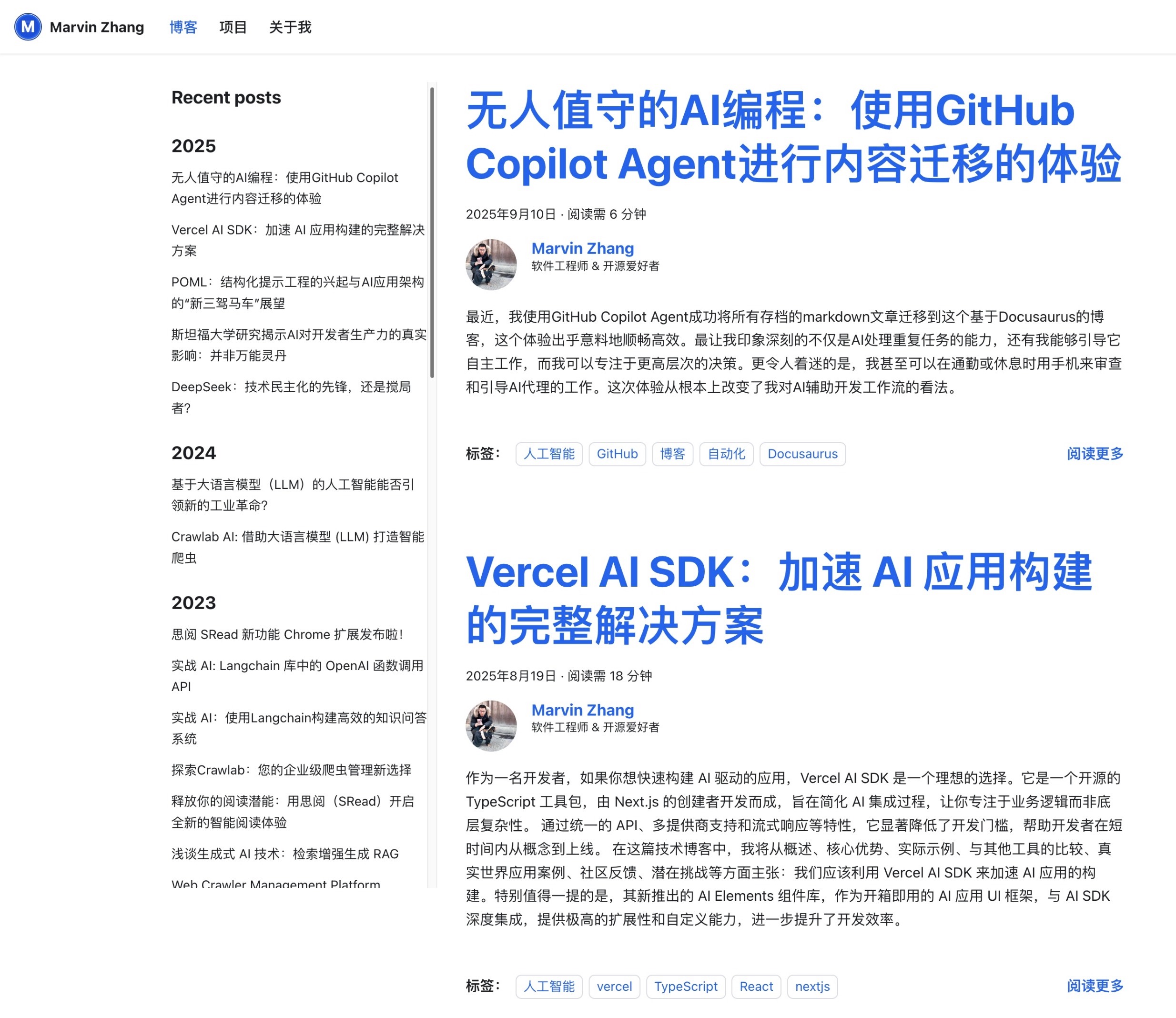
Here's a showcase of the bilingual blog after migration completion:

Figure 1: Migration results overview (Chinese)
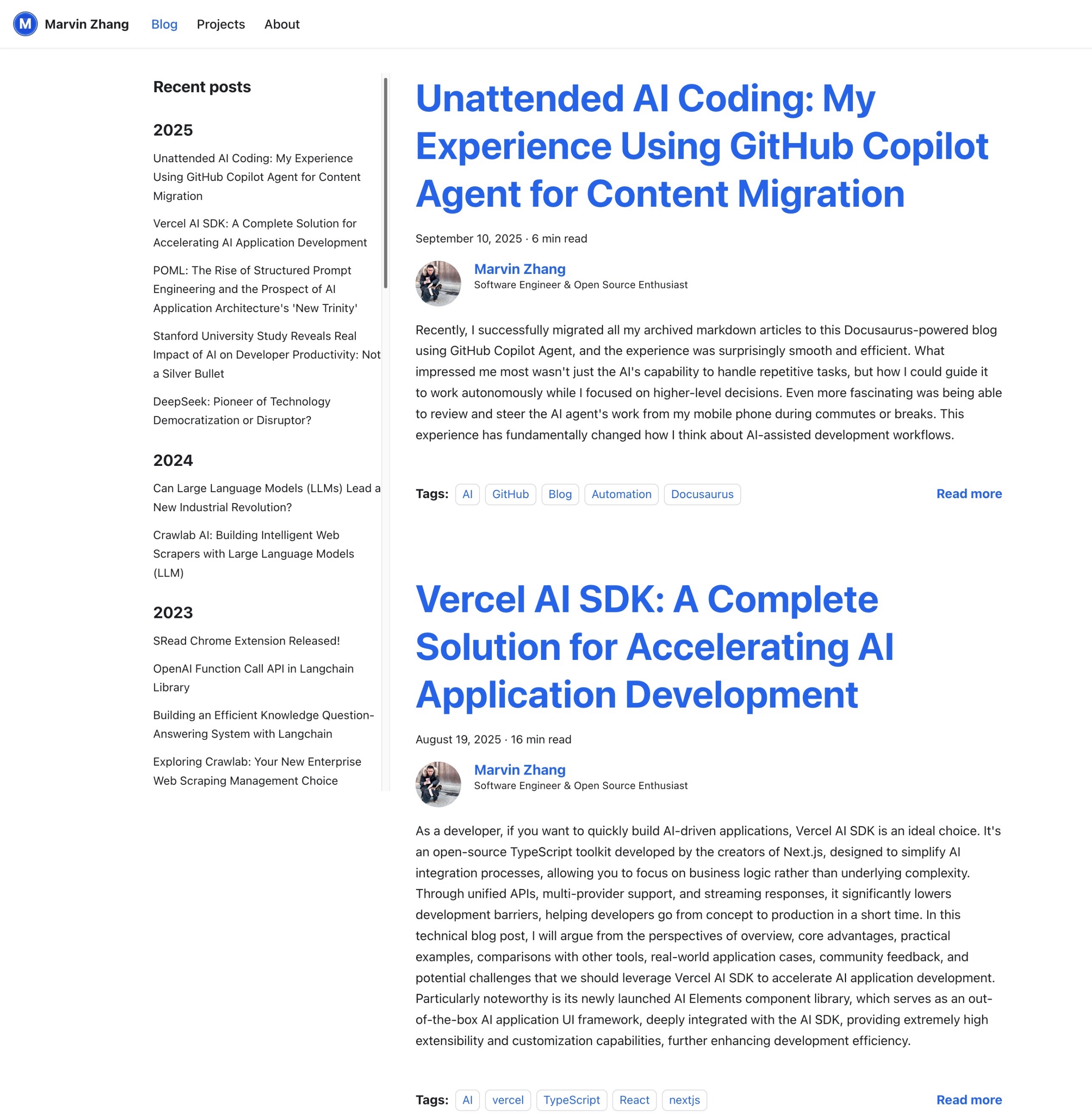
Figure 2: Migration results overview (English)

ArtiPub: Open-Source Free Multi-Platform Publishing Tool for Maximum Article Reach

· 6 min read
Marvin Zhang
Software Engineer & Open Source Enthusiast

Background

Many excellent programmers and technical professionals enjoy writing technical articles and blogs as a way to share and spread knowledge and experience, expand their visibility and influence, attract followers, and some tech bloggers even earn advertising revenue through writing. Many excellent bloggers have also gained opportunities to publish books and find jobs through this method. Therefore, writing technical articles is a very worthwhile investment that helps oneself while benefiting the public.

However, writing technical articles is usually time-consuming, especially for high-quality articles. Not only do they require extensive research, thoughtful article structure, and consideration of the target audience, but they also require a lot of preliminary work, such as setting up environments, writing demo code, testing code, and so on. A high-quality technical article typically takes 3-6 hours to complete. However, spending a lot of time writing articles only to have them receive little attention upon publication is quite frustrating. We believe that quality articles deserve attention and dissemination, allowing more technical workers to gain knowledge and benefit from reading them.

Every tech blogger has their preferred technical media platforms, such as Juejin, CSDN, WeChat Official Accounts, etc. Many tech bloggers also like to publish articles on different platforms to seek maximum attention while preventing their hard work from being copied and plagiarized by others. However, publishing on multiple platforms is troublesome: bloggers need to log into multiple media platforms simultaneously and copy-paste their articles one by one. What's more troublesome is that some platforms only support Markdown while others only support rich text, requiring bloggers to convert between the two, which increases workload.

The multi-platform publishing tool ArtiPub solves exactly this problem. Below, we'll introduce the recently launched open-source multi-platform publishing platform ArtiPub.