TypeScript-Enhanced Vue 3: How to Easily Build Enterprise-Level Frontend Applications

· 21 min read
Marvin Zhang
Software Engineer & Open Source Enthusiast

Introduction

A craftsman must first sharpen his tools if he is to do his work well. -- The Analects of Confucius

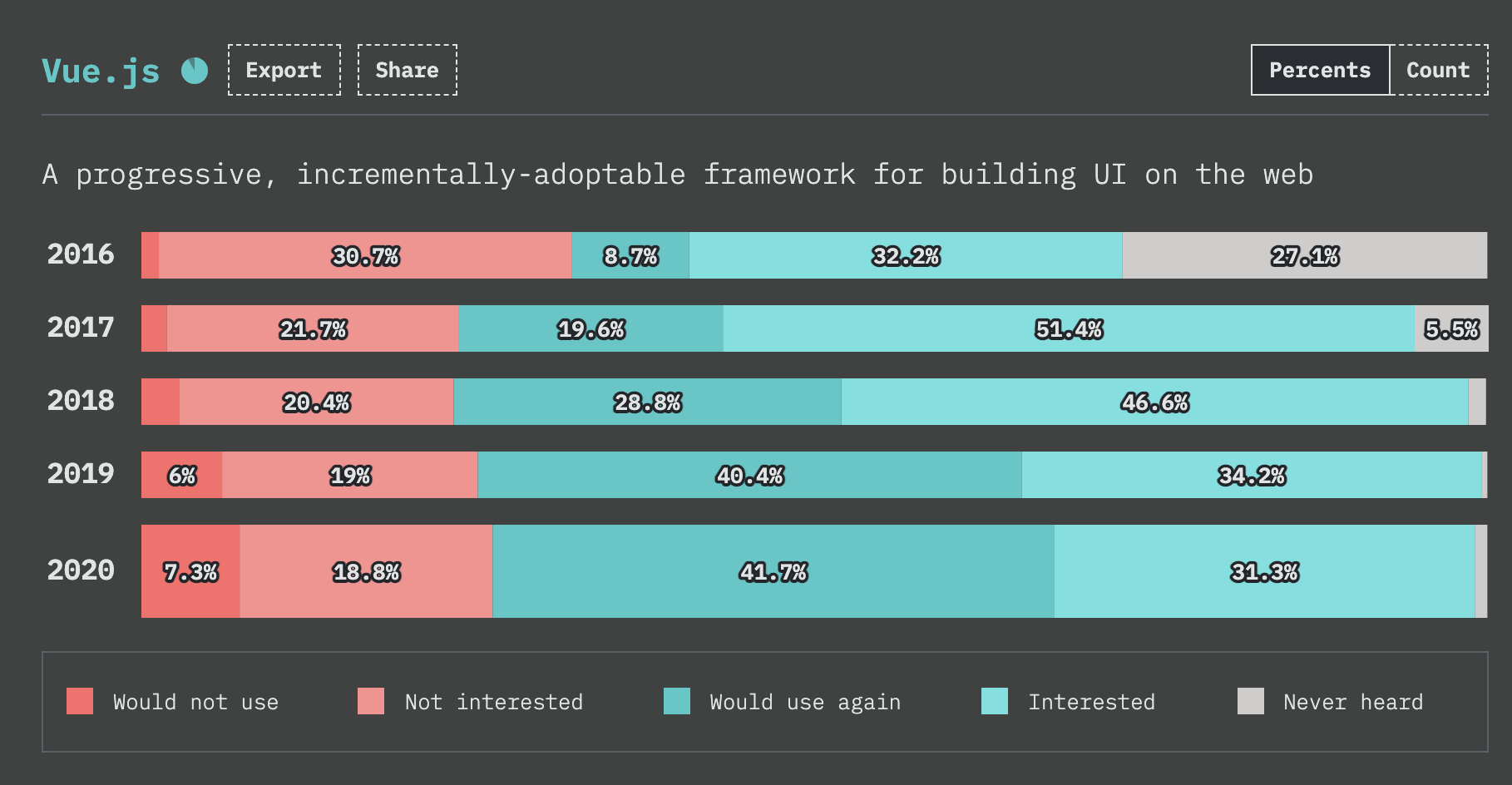
In today's frontend landscape dominated by three major frameworks, very few people don't know Vue. In 2014, former Google engineer Evan You released what's called a progressive frontend application framework, Vue. Its simplified template binding and component-based thinking had a positive and profound impact on the frontend field that was still in the jQuery era. The birth of Vue benefited frontend developers who weren't comfortable with TS or JSX syntax. Moreover, Vue's low learning threshold also makes it very easy for beginners to get started. This is also an important reason why Vue could spread rapidly in a short time. From the State of JS survey, we can see that Vue's awareness is close to 100%, and overall user satisfaction is also quite high.

stateofjs-vue

Vue is both powerful and easy to learn—does this mean Vue is a perfect framework? Unfortunately, the answer is no. Although Vue has a low entry threshold and is flexible and easy to use, this advantage also becomes a double-edged sword, bringing certain limitations for building large projects. Many frontend engineers who have developed large projects with Vue 2 have a love-hate relationship with Vue. However, with the release of Vue 3, these disadvantages that became prominent when developing large projects have been effectively resolved, making the Vue framework very versatile and truly having the potential to compete with "frontend framework leader" React. What important new features does Vue 3 bring? This article will provide a detailed introduction.

Why TypeScript is Essential for Developing Large-Scale Frontend Projects

· 18 min read
Marvin Zhang
Software Engineer & Open Source Enthusiast

Introduction

How can I blame you for making mistakes, when I gave you too much freedom. -- Jacky Cheung "Too Much"

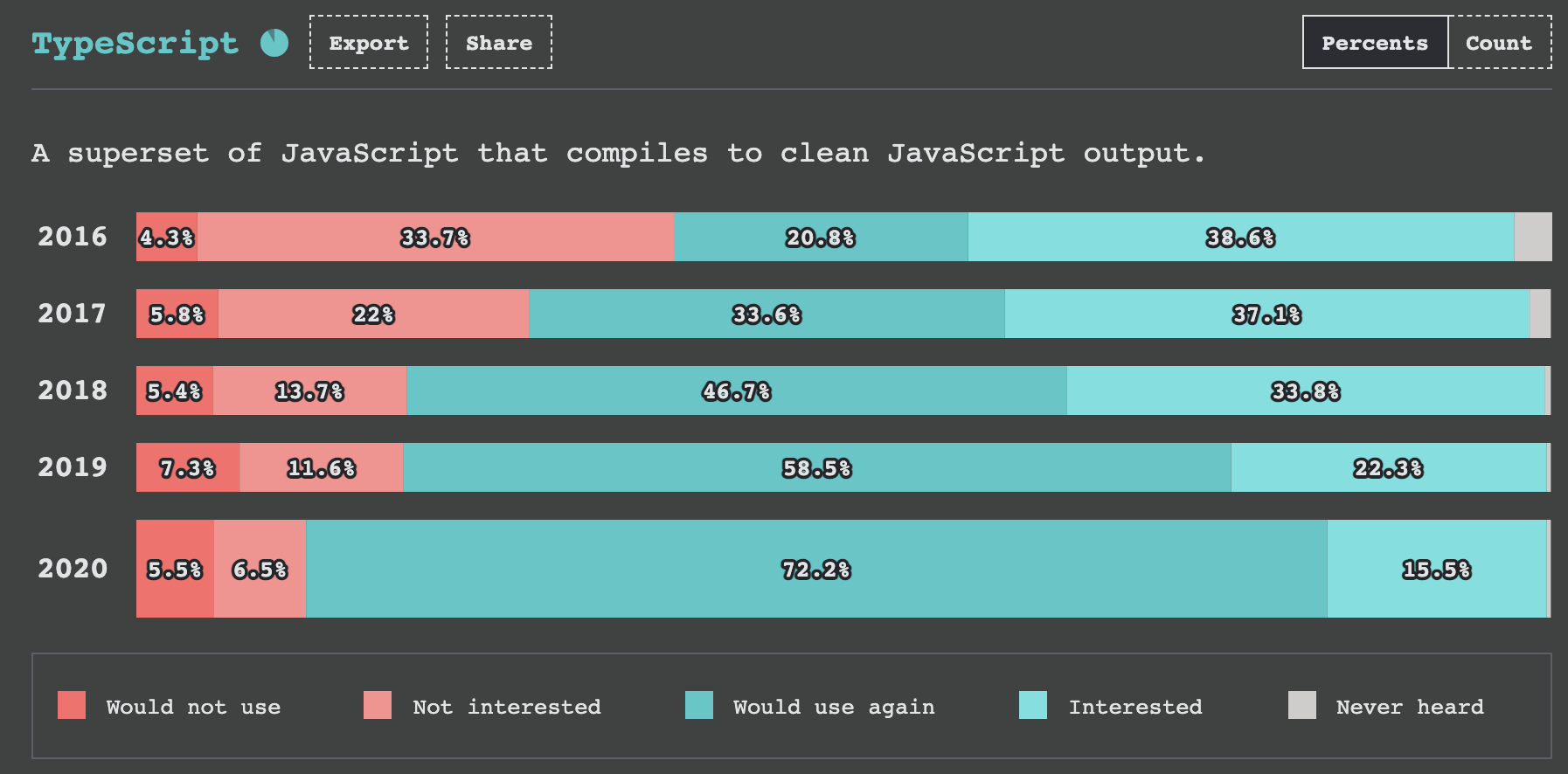
Many software engineers probably know or understand TypeScript (abbreviated as TS) to some extent, and frontend developers who have used TypeScript consistently express positive feelings about it. If you search for TypeScript on search engines, you'll find an overwhelming number of articles praising or complimenting TS, such as "TypeScript Makes You Never Want to Go Back to JavaScript", "TypeScript Sweet Series", and "If You Don't Embrace TypeScript, You're Getting Old!". According to the latest 2020 State of JS Survey Report, TypeScript's popularity and satisfaction are increasing year by year, with "TS fans" (developers who answered "would continue using" in State of JS) including this author, even exceeding 70% (as shown below).

typescript-2020-stateofjs-survey

In summary, TS now holds an unshakeable core position in the frontend field and is a very important frontend engineering development tool. TS is one of Microsoft's outstanding contributions to the software industry after embracing open source projects. However, TypeScript cannot improve the runtime efficiency of JavaScript code in browsers, nor can it increase developer productivity like React and Vue frontend frameworks, and it certainly cannot make your frontend pages look attractive. So what exactly makes it such a widely beloved "truly fragrant language"? What makes frontend developers love it so much? If you have similar questions, please continue reading. This article will explain in detail the advantages of using TS to develop large-scale frontend projects.

ArtiPub: Open-Source Free Multi-Platform Publishing Tool for Maximum Article Reach

· 6 min read
Marvin Zhang
Software Engineer & Open Source Enthusiast

Background

Many excellent programmers and technical professionals enjoy writing technical articles and blogs as a way to share and spread knowledge and experience, expand their visibility and influence, attract followers, and some tech bloggers even earn advertising revenue through writing. Many excellent bloggers have also gained opportunities to publish books and find jobs through this method. Therefore, writing technical articles is a very worthwhile investment that helps oneself while benefiting the public.

However, writing technical articles is usually time-consuming, especially for high-quality articles. Not only do they require extensive research, thoughtful article structure, and consideration of the target audience, but they also require a lot of preliminary work, such as setting up environments, writing demo code, testing code, and so on. A high-quality technical article typically takes 3-6 hours to complete. However, spending a lot of time writing articles only to have them receive little attention upon publication is quite frustrating. We believe that quality articles deserve attention and dissemination, allowing more technical workers to gain knowledge and benefit from reading them.

Every tech blogger has their preferred technical media platforms, such as Juejin, CSDN, WeChat Official Accounts, etc. Many tech bloggers also like to publish articles on different platforms to seek maximum attention while preventing their hard work from being copied and plagiarized by others. However, publishing on multiple platforms is troublesome: bloggers need to log into multiple media platforms simultaneously and copy-paste their articles one by one. What's more troublesome is that some platforms only support Markdown while others only support rich text, requiring bloggers to convert between the two, which increases workload.

The multi-platform publishing tool ArtiPub solves exactly this problem. Below, we'll introduce the recently launched open-source multi-platform publishing platform ArtiPub.